
01
Finalize your design
Sizes, materials, finishes, and artwork are locked in. You review the proof carefully and approve when every detail matches your brief.
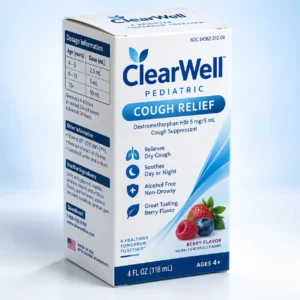
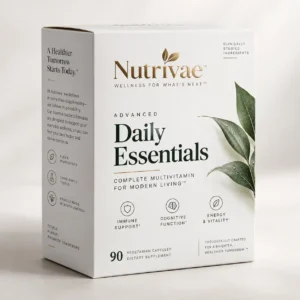
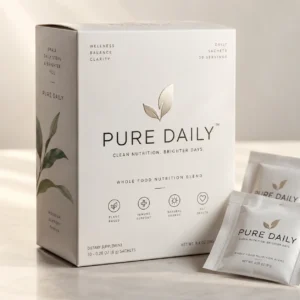
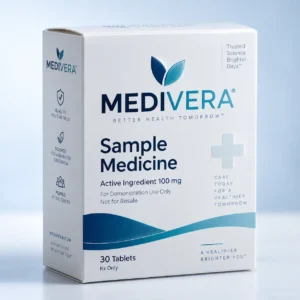
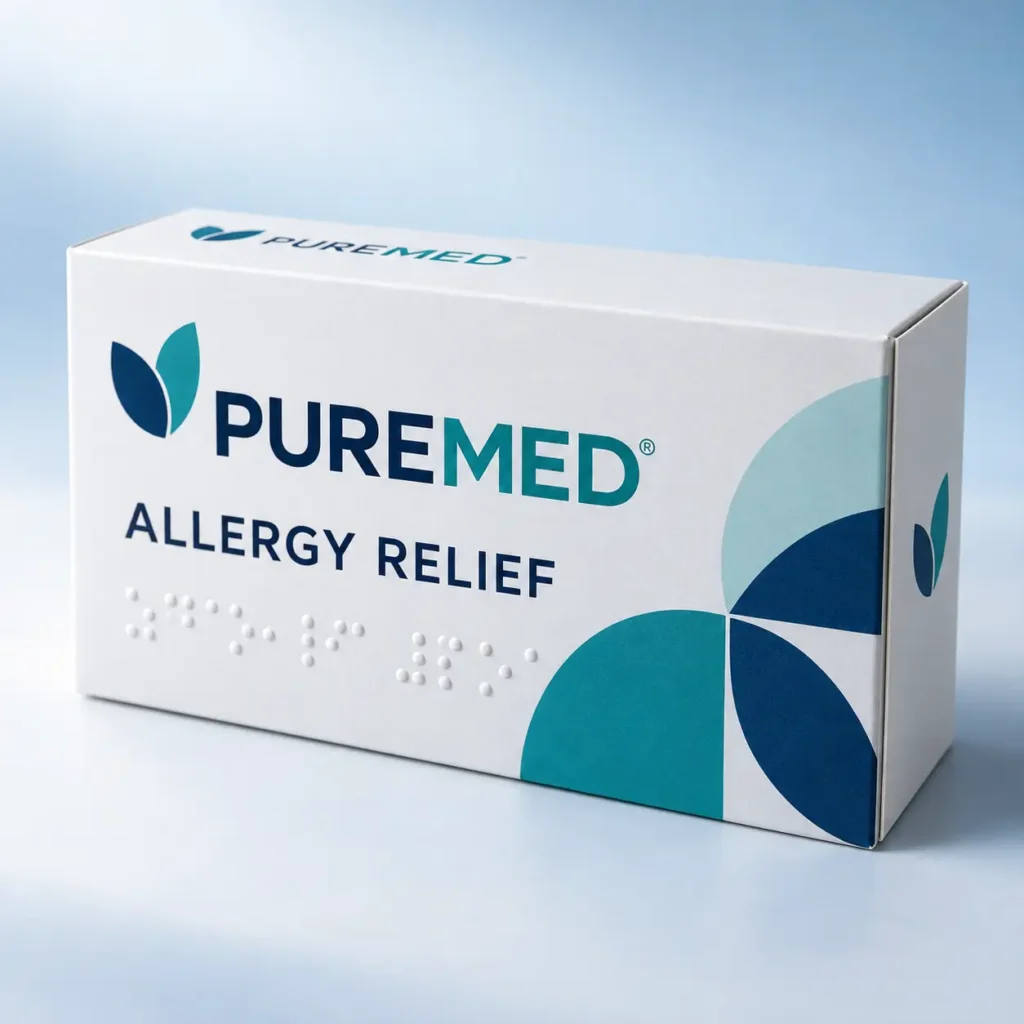
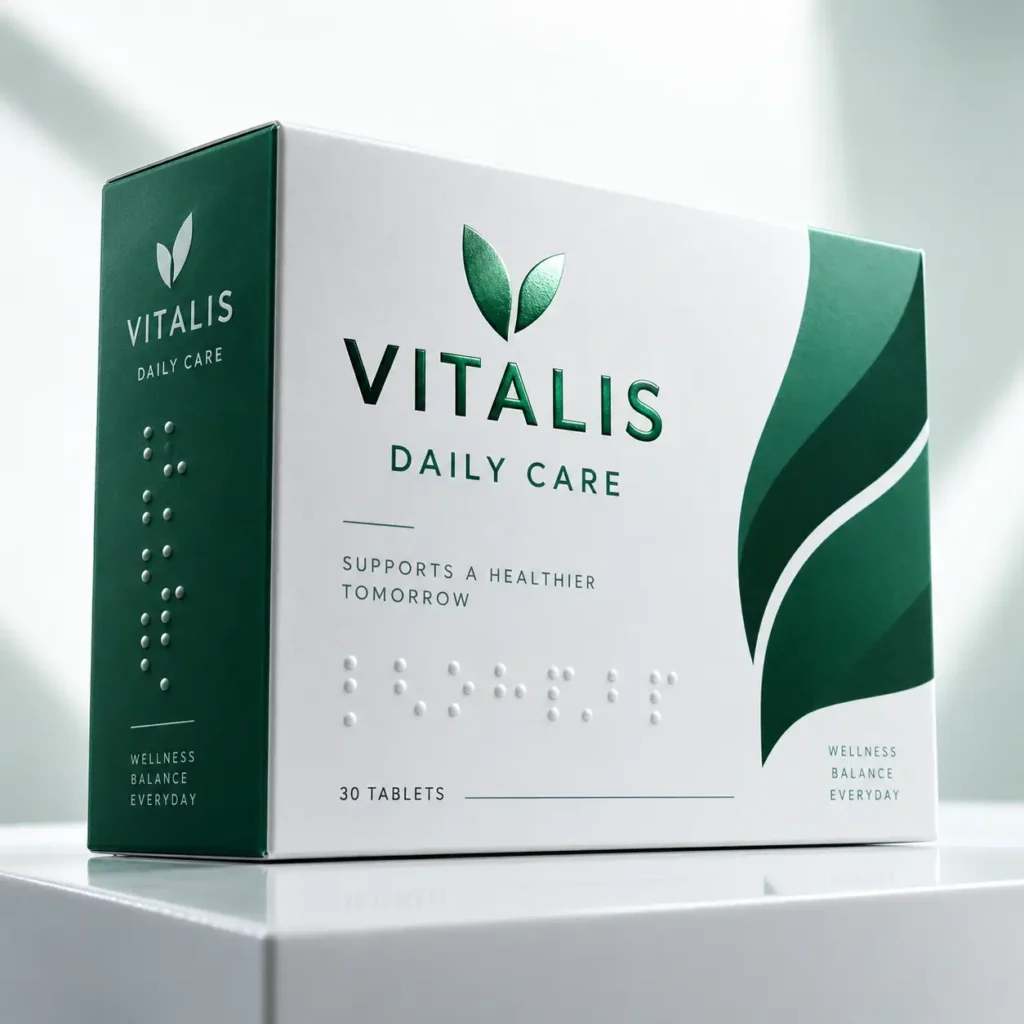
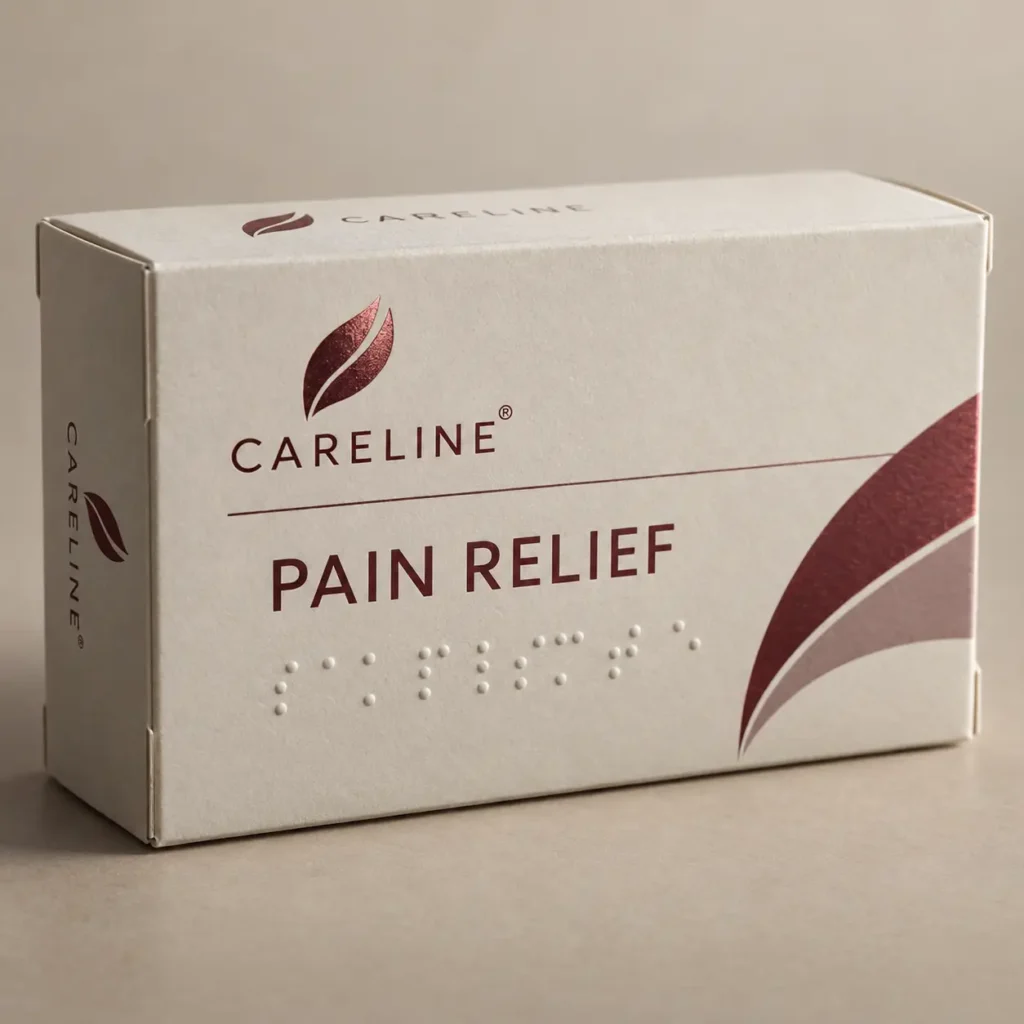
In the United States, braille on a medicine carton is optional. In Europe and the UK, it is mandatory on outer packaging. Braille printed medicine boxes let one carton serve both markets while giving blind and low-vision patients independent access to product names and strengths.
The Packaging Masters embosses tactile text in the Marburg Medium typeface used for pharmaceutical braille, with dot height and placement planned around folds and glue flaps. We pair braille with eye drop cartons and prescription bottle packaging for accessible ranges.
What Makes Us Different?




From approval to doorstep — handled end to end.
Every order runs through four specialist teams — structural design, print, finishing, and dispatch — so your packaging keeps moving without bottlenecks, delays, or guesswork.
Sizes, materials, finishes, and artwork are locked in. You review the proof carefully and approve when every detail matches your brief.
Your job moves to print, cutting, lamination, and finishing. Our production team monitors color, registration, and structural accuracy.
Finished boxes are checked against the approved sample, counted, and securely packed to protect edges and print during transit.
Dispatch shares tracking details so your team can plan filling and launch dates. Your packaging arrives press-ready and production-ready.
Braille only works if a fingertip can read it. Dots that are too low, too sharp, or squashed during gluing and shipping become unreadable. Heavy varnish or lamination can fill in the dots, and placing braille across a crease can split a word in half. Patients then cannot confirm the medicine they are holding.
Translation is the quieter risk. A single wrong character can turn one strength into another, and few people on a design team can proofread braille by eye. Spacing errors between cells or lines are equally confusing. Small cartons make this harder, because product names and strengths must fit on narrow panels like those on our ointment and cream cartons.
Well-made braille printed medicine boxes start with the right board caliper, a compatible coating, and a placement map that avoids folds and glue flaps. Simple straight-tuck formats, such as our tuck end medicine boxes, often give the largest uninterrupted panels for tactile text.
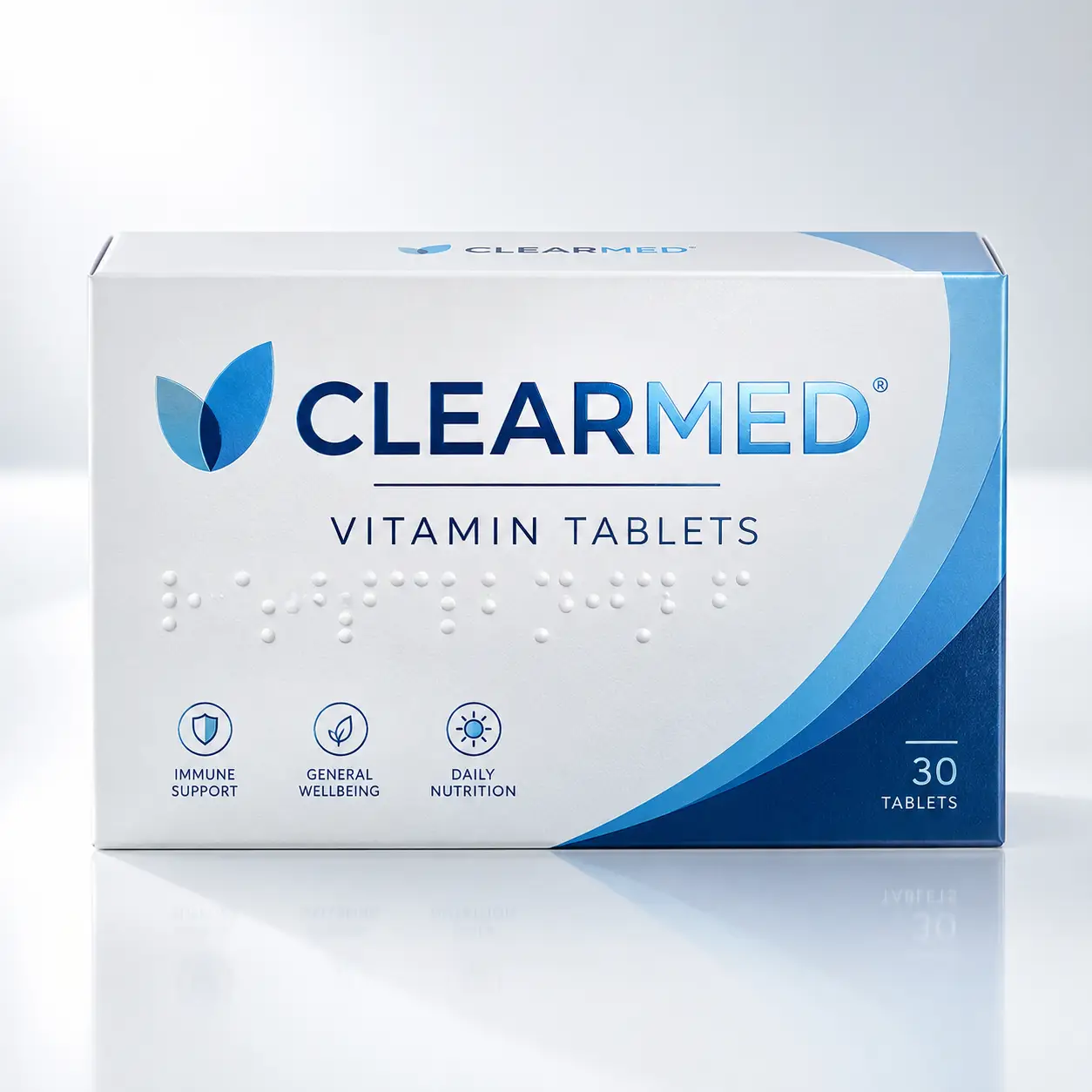
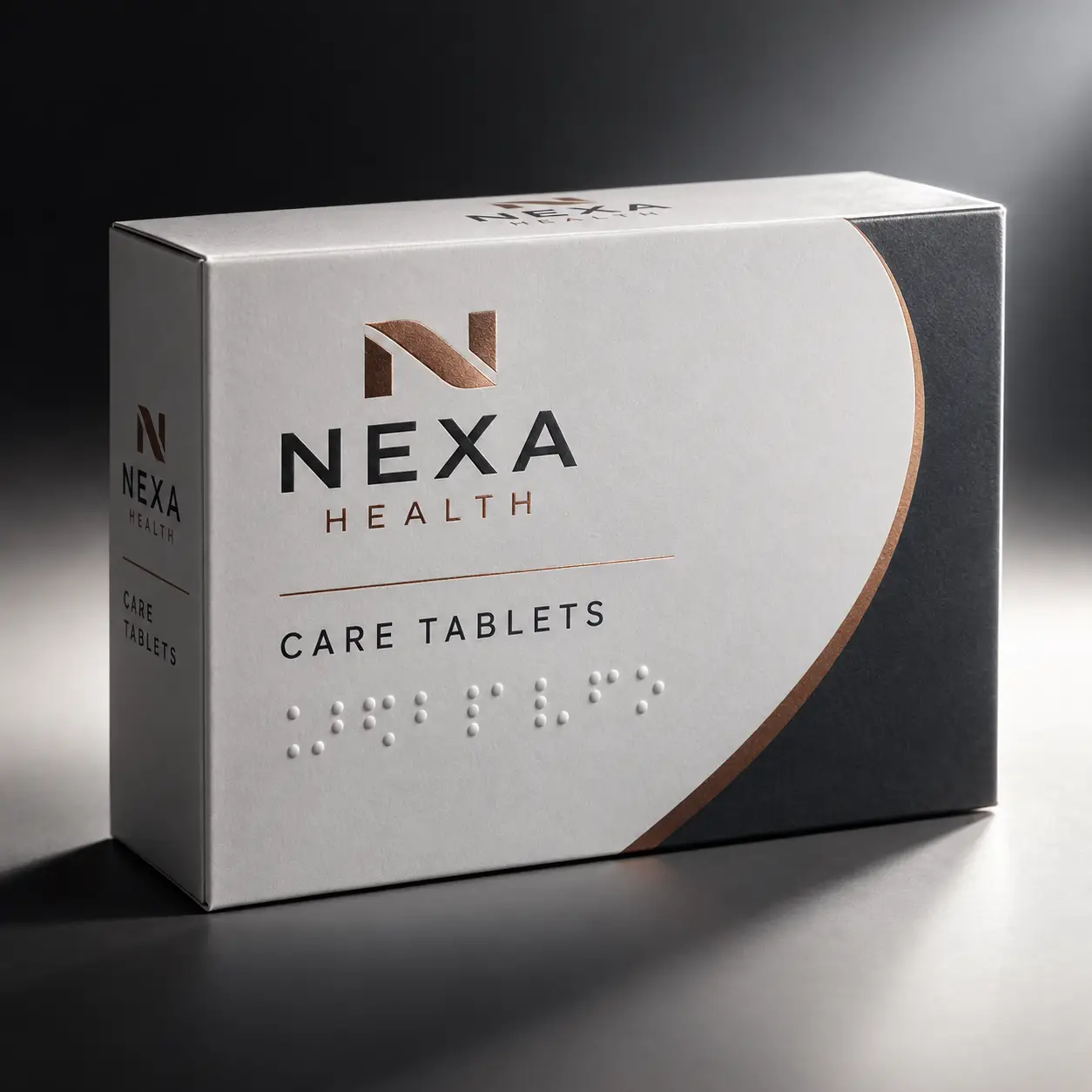
Most pharmaceutical braille follows EN ISO 17351, the standard for braille on medicinal product packaging, and uses the Marburg Medium typeface. Rules differ by market, so this overview helps you plan before artwork.
| Market | General Position |
|---|---|
| European Union | Product name required in braille on outer packaging |
| United Kingdom | Similar braille expectations to the EU |
| United States | No federal braille requirement for medicines |
| Canada | Encouraged through accessibility guidance |
Dot height is the key quality measure. Industry guidance commonly cites a minimum of about 0.10 millimeters, with many converters targeting around 0.20 millimeters for clear reading. Uncoated or matte areas emboss more crisply than heavy foil or thick lamination, so avoid placing braille directly on effects like those on our foil stamped supplement cartons. Requirements change over time, so confirm current rules for each market with your regulatory adviser before printing. We note the target markets on every proof so nothing is missed.
Exporters shipping to Europe or the UK need braille on outer cartons, and adding it once lets one SKU serve several markets. Generic manufacturers use it to reach pharmacy chains with accessibility commitments. US over-the-counter brands add braille voluntarily to stand out and to serve the growing number of patients living with low vision.
Research sponsors sometimes request tactile text on study kits for participants with visual impairment, and our clinical trial packaging supports these special builds. Typical braille content includes the product name, strength, and sometimes dosage form. Keeping the wording short makes it easier to fit on compact panels without crowding.
Send us your approved text, carton dimensions, and target markets. We will plan braille placement, prepare a translation proof, and send a digital layout within 24 hours. Request your quote today and launch braille printed medicine boxes that every patient can read with confidence.
Start Your Quote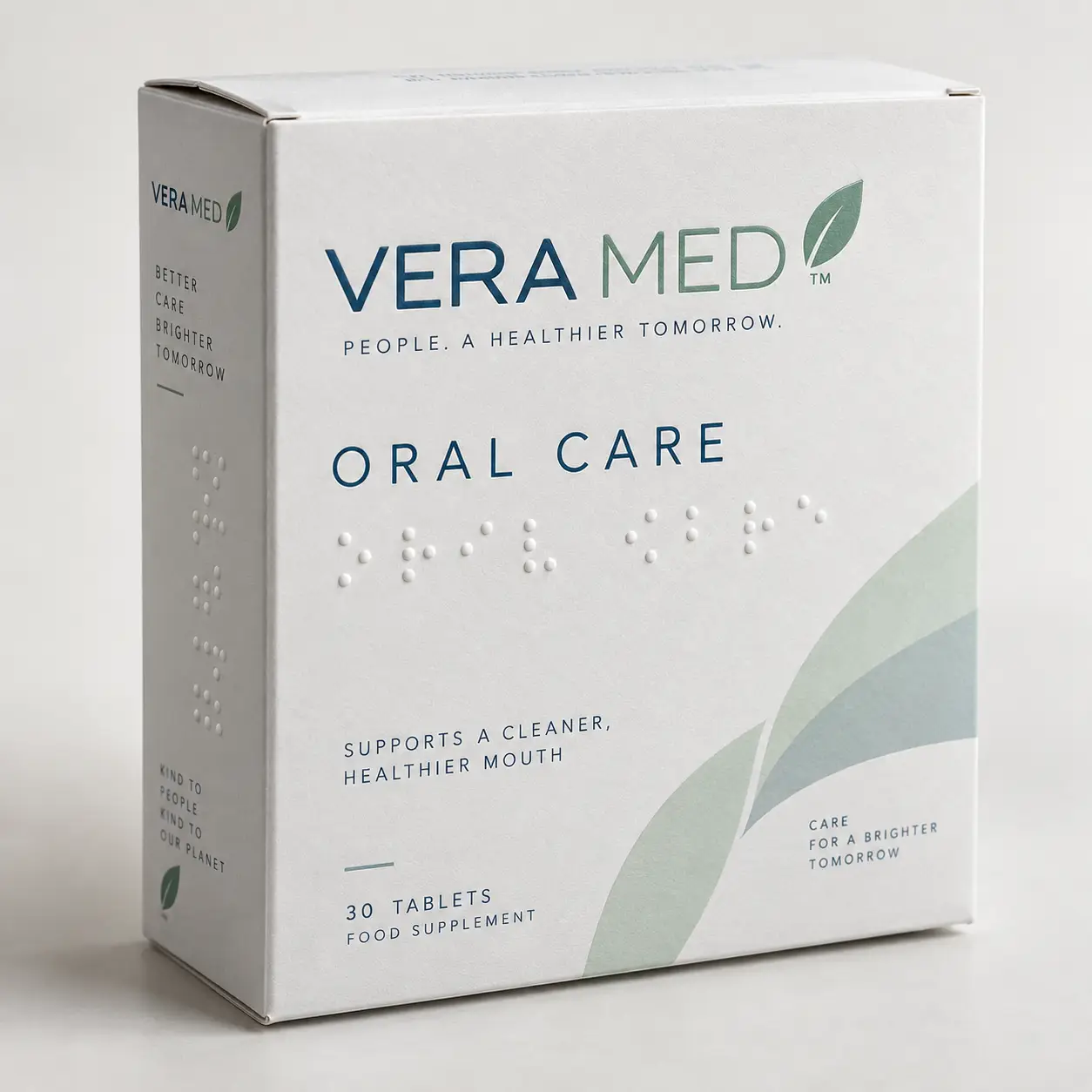
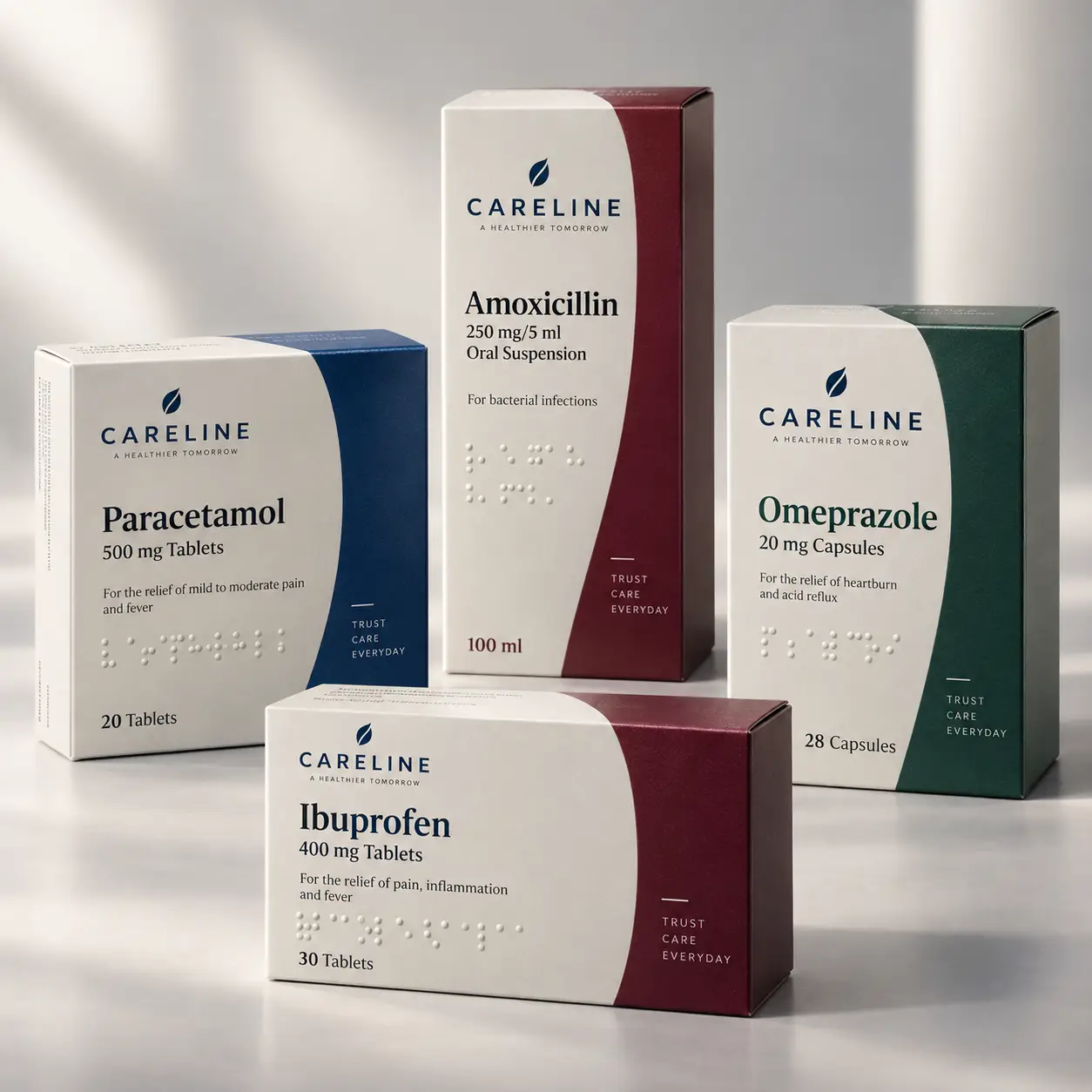
Every braille job starts with a placement map. We mark the panel, line count, and cell spacing on your dieline, keeping tactile text clear of creases, glue flaps, windows, and tamper strips like those used in our tamper-evident pharma packaging. Printed text can run underneath braille, but the dots must stay readable on their own.
Approval happens in two stages. First, you review the braille translation against your approved wording. Then you receive a physical sample to feel the dots and check height, spacing, and position. Many brands ask a braille reader to test samples, which is a simple, valuable final check.
Every order of braille printed medicine boxes includes free design support, custom sizes, and quality checks on dot height, translation accuracy, and print registration. Request a free sample from The Packaging Masters and confirm the tactile feel before full production.
No federal rule requires braille printed medicine boxes in the USA. Many brands add braille voluntarily for accessibility, retailer programs, or export. The EU and UK expect braille on outer packaging, so brands selling there often add it to every carton for consistency.
Most cartons show the product name in braille, and many also include the strength. Some brands add the dosage form for clarity. Space limits decide how much fits, so we plan line count and cell spacing early and confirm the text with your regulatory team.
Yes. Braille works on most folding carton styles, as long as it avoids glue points and folds. Our auto lock pharmaceutical boxes have large front panels that suit tactile text well, especially for bottles and vials that need a secure bottom.
Yes, though narrow panels limit how many cells fit per line. Our pill and blister cartons show common sizes. Braille can wrap onto a second line or a side panel, but it should never cross a fold, crease, or glue flap.
Yes. Although rules focus on human medicines, some animal health brands add braille for blind and low-vision pet owners. Our veterinary medicine boxes explain carton options, and the same dot height, spacing, and placement guidance applies to these cartons too.
Custom braille cartons start around $0.30 per unit at volume. Pricing depends on carton size, board, print colors, coatings, embossing tooling, and quantity. Braille tooling is a one-time setup cost per design. We send detailed wholesale quotes within 24 hours, with lower pricing at larger quantities.
Yes. Heavy lamination, thick varnish, or foil can soften or fill the dots. Light aqueous or matte coatings usually work well. We recommend testing a physical sample with your chosen finish, since texture and dot crispness are easiest to judge by touch.
Braille cartons usually ship in about 12 to 18 business days after proof approval, since embossing tools must be made and translations checked. Rush options may be available. We confirm your full timeline in the quote, including delivery straight to your facility or warehouse.
Instead of generic stock boxes, every project starts with your product, your goals, and your customer experience — so the packaging protects in transit and still feels premium in hand.
Built to your product, not pulled from a shelf of ready-made sizes.
Strong structures, neat edges, and finishes that actually sell.
Businesses and individuals can order — start with a small run and scale when you’re ready.
4–5 business days production after proof approval — you always know what’s next.
Copyright © 2026 thepackagingmasters.com All rights reserved.