
01
Finalize your design
Sizes, materials, finishes, and artwork are locked in. You review the proof carefully and approve when every detail matches your brief.
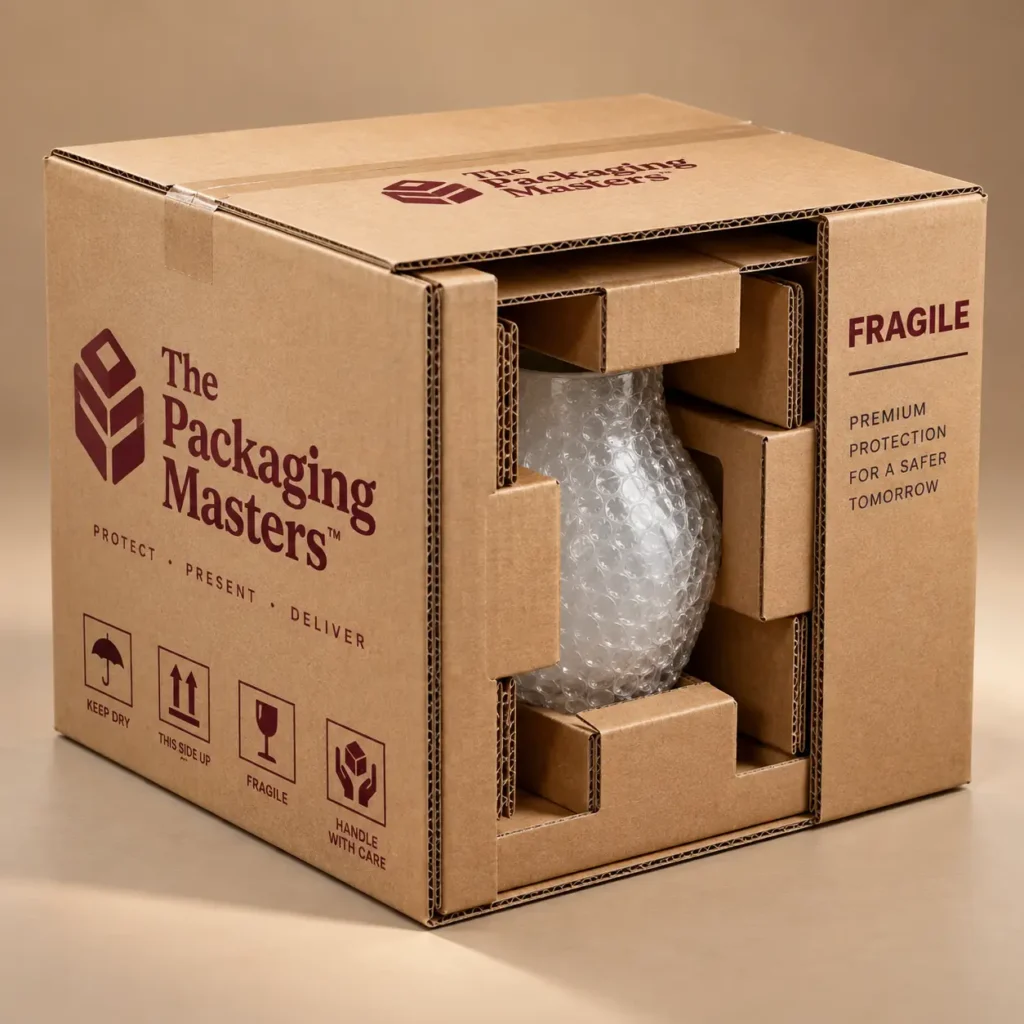
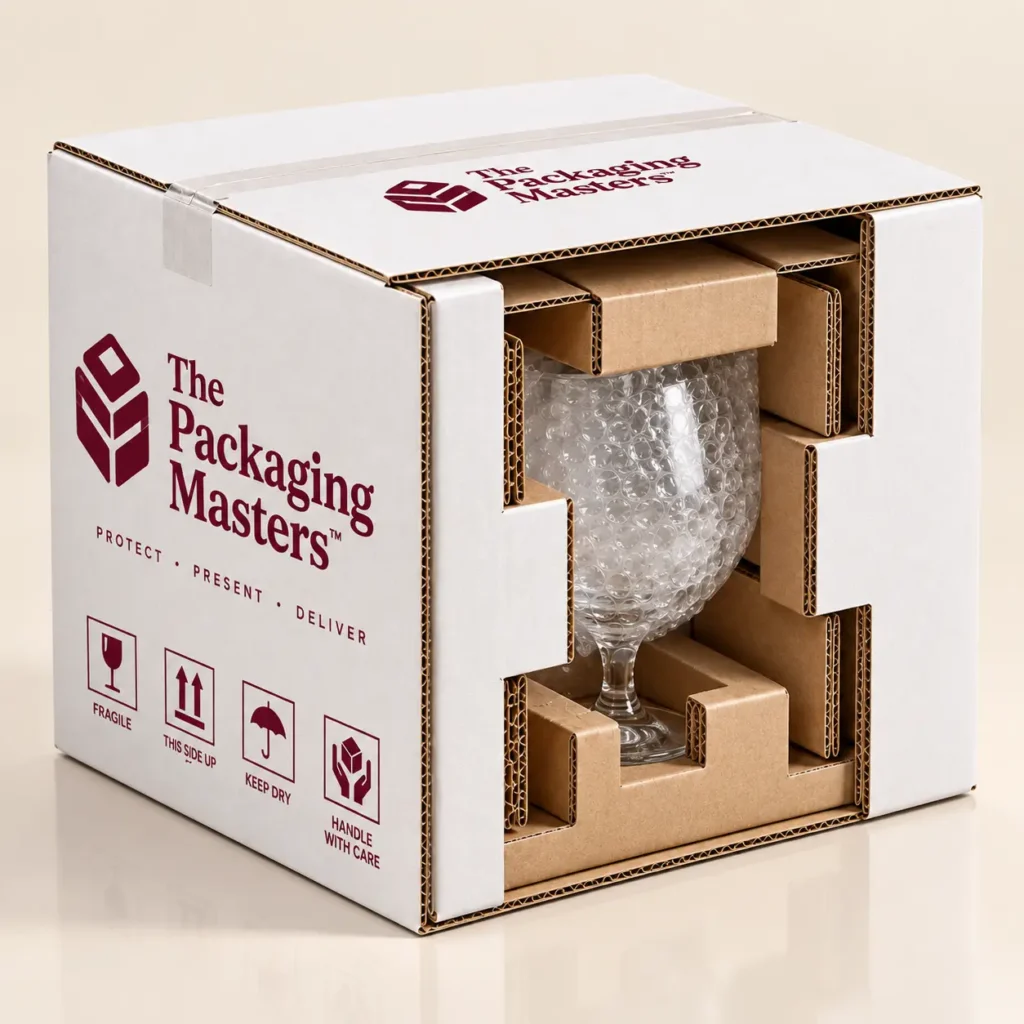
Every broken bottle, cracked screen, or chipped ceramic costs you twice: once for the replacement and again in lost customer trust. Carriers drop, toss, stack, and vibrate parcels through automated sorting systems, and a fragile sticker rarely changes that. Fragile item protective boxes are engineered with strong corrugated walls and custom-fit inserts so products arrive intact.
The Packaging Masters designs damage-resistant shippers for glass, electronics, ceramics, and cosmetics. Combine them with ESD-safe electronics packaging or temperature-controlled shippers when products need extra care.
What Makes Us Different?




From approval to doorstep — handled end to end.
Every order runs through four specialist teams — structural design, print, finishing, and dispatch — so your packaging keeps moving without bottlenecks, delays, or guesswork.
Sizes, materials, finishes, and artwork are locked in. You review the proof carefully and approve when every detail matches your brief.
Your job moves to print, cutting, lamination, and finishing. Our production team monitors color, registration, and structural accuracy.
Finished boxes are checked against the approved sample, counted, and securely packed to protect edges and print during transit.
Dispatch shares tracking details so your team can plan filling and launch dates. Your packaging arrives press-ready and production-ready.
Transit damage is one of the most expensive problems in ecommerce. Each broken item triggers a refund or replacement, a second shipping charge, customer service time, and often a negative review that discourages future buyers. For brands selling glassware, candles, cosmetics, electronics, or artwork, damage rates of even a few percent can wipe out profit on entire product lines.
Most breakage comes from three causes: boxes that are too large, products that shift inside, and board that is too weak for the weight. Loose void fill settles during the journey, leaving items free to slam into the walls. Fragile item protective boxes solve this with right-sized dimensions, custom inserts that lock each product in place, and corrugated grades chosen for real carrier handling. Products sensitive to humidity can add liners similar to our moisture-resistant packaging boxes, and high-value items gain extra security with tamper evident seals.
We begin by reviewing your product weight, shape, and damage history, then design protection around the specific failures you are experiencing today.

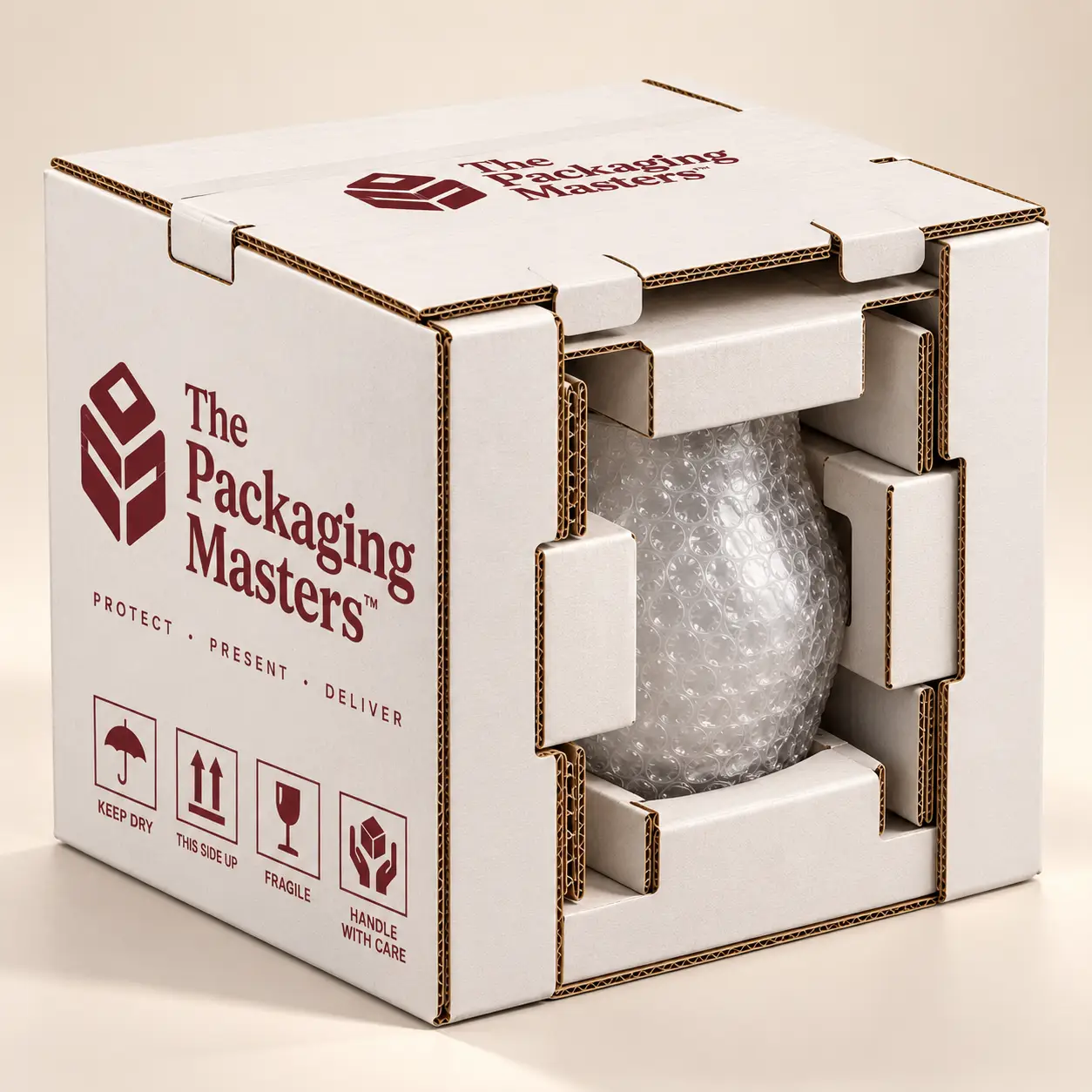
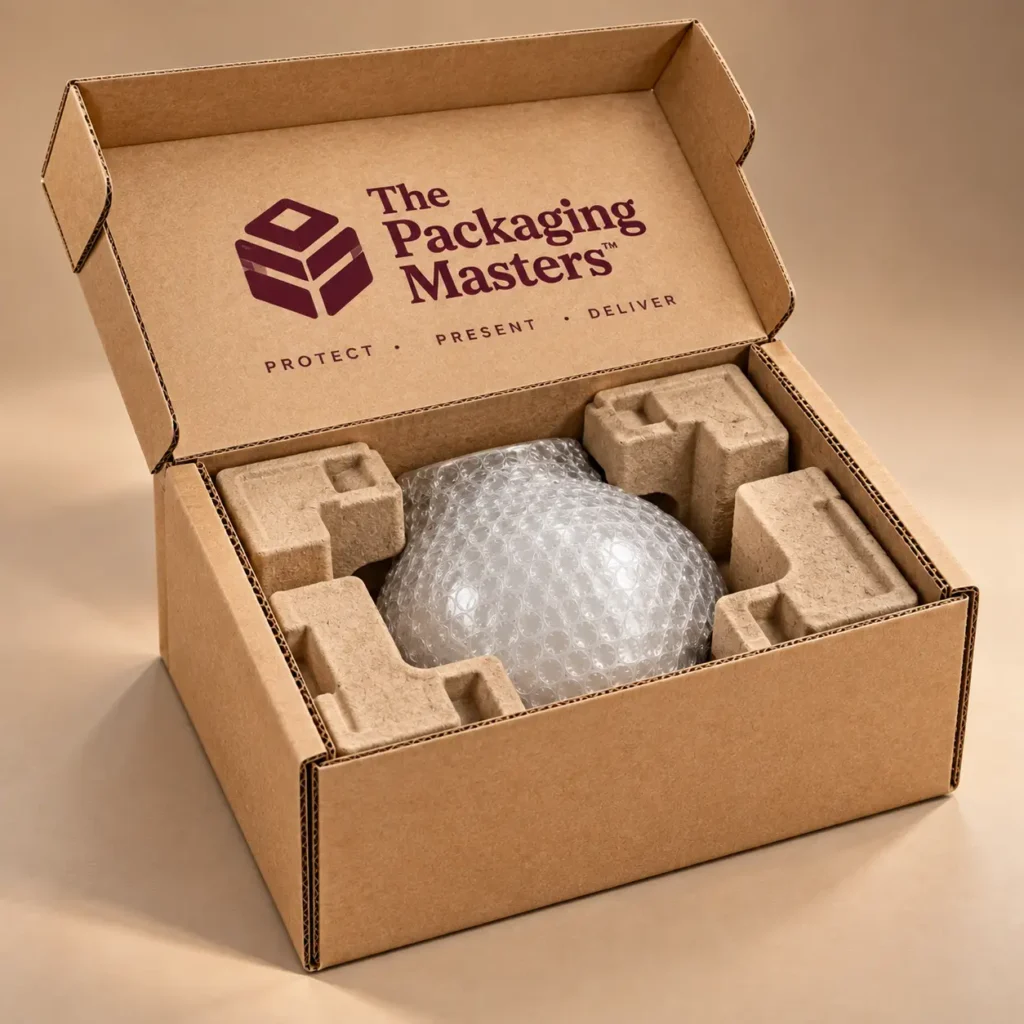
Each insert material absorbs shock differently, so the right choice depends on product weight, fragility, and sustainability goals.
| Insert Type | Key Strengths | Best For |
|---|---|---|
| Polyurethane or EVA foam | High shock absorption and precise cavities | Electronics, instruments, and luxury goods |
| Molded pulp | Recyclable, sturdy, and cost effective | Bottles, jars, and consumer devices |
| Corrugated partitions | Separates multiple items and stacks well | Glassware, wine, and candle sets |
| Suspension or retention film | Floats products away from box walls | Tablets, screens, and small devices |
| Honeycomb paper wrap | Plastic-free cushioning and void fill | Ceramics, mugs, and gifts |
Board strength matters as much as cushioning. Single-wall E-flute suits light items and premium mailers, B-flute and C-flute handle heavier loads, and double-wall corrugated protects bulky or very fragile goods. Edge crush test ratings such as 32 ECT or 44 ECT indicate stacking strength. Choosing fragile item protective boxes with the right flute and insert combination keeps products centered and cushioned from every side. Brands seeking plastic-free protection often pair molded pulp with our eco biodegradable boxes, while retail sets ship well inside partitioned multi pack sleeve boxes that keep each unit separated.
Glassware and barware brands rely on partitioned inserts that stop pieces knocking together. Consumer electronics companies use foam cavities to protect screens, lenses, and ports. Cosmetics and fragrance brands cradle glass bottles in molded pulp or foam to prevent cracks and leaks. Candle makers need inserts that protect jars and keep wax surfaces from scuffing, while wineries and craft distilleries ship bottles in certified partitioned shippers.
Artists and galleries protect framed prints and ceramics with corner protectors and suspension designs. Collectible and hobby businesses ship figurines and limited editions in foam-lined boxes that also serve as display storage. Premium brands pair protection with presentation, adding a rigid inner box or a reusable magnetic box inside the shipper. Fragile item protective boxes keep each of these products safe from warehouse to doorstep.
Share your product dimensions, weight, quantity, and shipping method. We will recommend board, flute, and insert design, then send a digital proof within 24 hours. Start your quote and stop paying for breakage.
Start Your Quote
Protection should be proven, not assumed. Many brands validate packaging with drop, vibration, and compression tests based on ISTA procedures, which simulate carrier handling before products ever ship to customers. A simple in-house test, dropping a packed sample from table height onto each face, edge, and corner, reveals weak points quickly. Our team uses results to adjust insert density, cavity depth, and board grade.
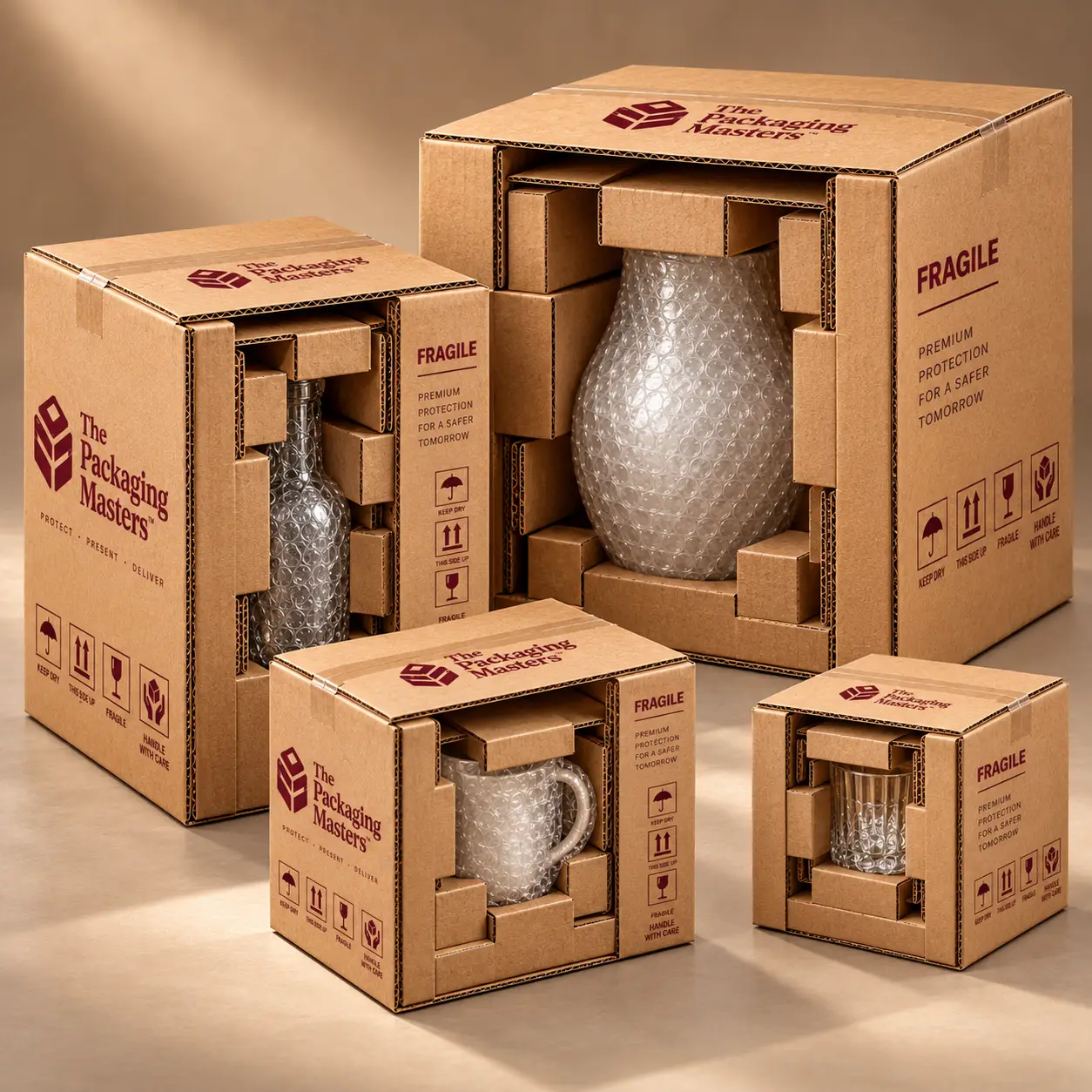
Right-sizing reduces damage and cost together. A box that leaves a small, controlled cushion around the insert prevents movement while lowering dimensional weight charges. Extra padding underneath protects against the compression of heavier items. Branding still matters, so exteriors can carry full-color printing while interiors display handling instructions or a welcome message.
Every order of fragile item protective boxes includes structural review, insert fit checks, and print inspection before shipping. Request a free sample from The Packaging Masters and run your own drop test with real products before approving full production.
Fragile item protective boxes are shipping boxes built with strong corrugated board and custom-fit inserts that hold breakable products securely in place. They absorb shock, prevent movement, and resist crushing so glass, electronics, ceramics, and cosmetics arrive undamaged after rough carrier handling and sorting.
It depends on weight and fragility. Polyurethane and EVA foam give maximum shock absorption for electronics and luxury goods. Molded pulp offers recyclable protection for bottles and jars. Corrugated partitions separate multiple items such as glassware, while honeycomb paper provides plastic-free cushioning for gifts.
Fragile labels have limited effect because most parcels move through automated sorting systems. Strong packaging is what protects products. Combine sturdy board and inserts with clear handling labels, and add lockable packaging boxes when high-value items also need theft protection.
Light items often ship safely in single-wall E-flute or B-flute board rated around 32 ECT. Heavier or very fragile products may need 44 ECT or double-wall corrugated. We recommend board grade based on product weight, shipping method, and expected stacking loads in warehouses.
Yes. Exteriors can carry full-color printing, and interiors can feature branded messages. Adding soft finishes from our velvet touch boxes or interior graphics turns protective packaging into a memorable unboxing experience that customers enjoy sharing online with friends, followers, and family.
Molded pulp, corrugated partitions, and honeycomb paper inserts are widely recyclable with standard paper. Foam inserts provide stronger protection but are harder to recycle locally. We help you balance product safety with sustainability goals and choose materials your customers can dispose of responsibly.
Yes. Small glass vials, testers, and trial products can be secured in compact inserts. Our product sampling boxes combine snug cavities with branded printing, keeping delicate samples safe while introducing customers to your full product range and encouraging larger follow-up purchases.
Pricing depends on size, board grade, insert material, printing, and quantity. Fragile item protective boxes start around $0.90 per unit at higher volumes. Custom foam inserts cost more than corrugated or pulp options, and one-time tooling may apply for molded pulp designs.
Instead of generic stock boxes, every project starts with your product, your goals, and your customer experience — so the packaging protects in transit and still feels premium in hand.
Built to your product, not pulled from a shelf of ready-made sizes.
Strong structures, neat edges, and finishes that actually sell.
Businesses and individuals can order — start with a small run and scale when you’re ready.
4–5 business days production after proof approval — you always know what’s next.
Copyright © 2026 thepackagingmasters.com All rights reserved.