




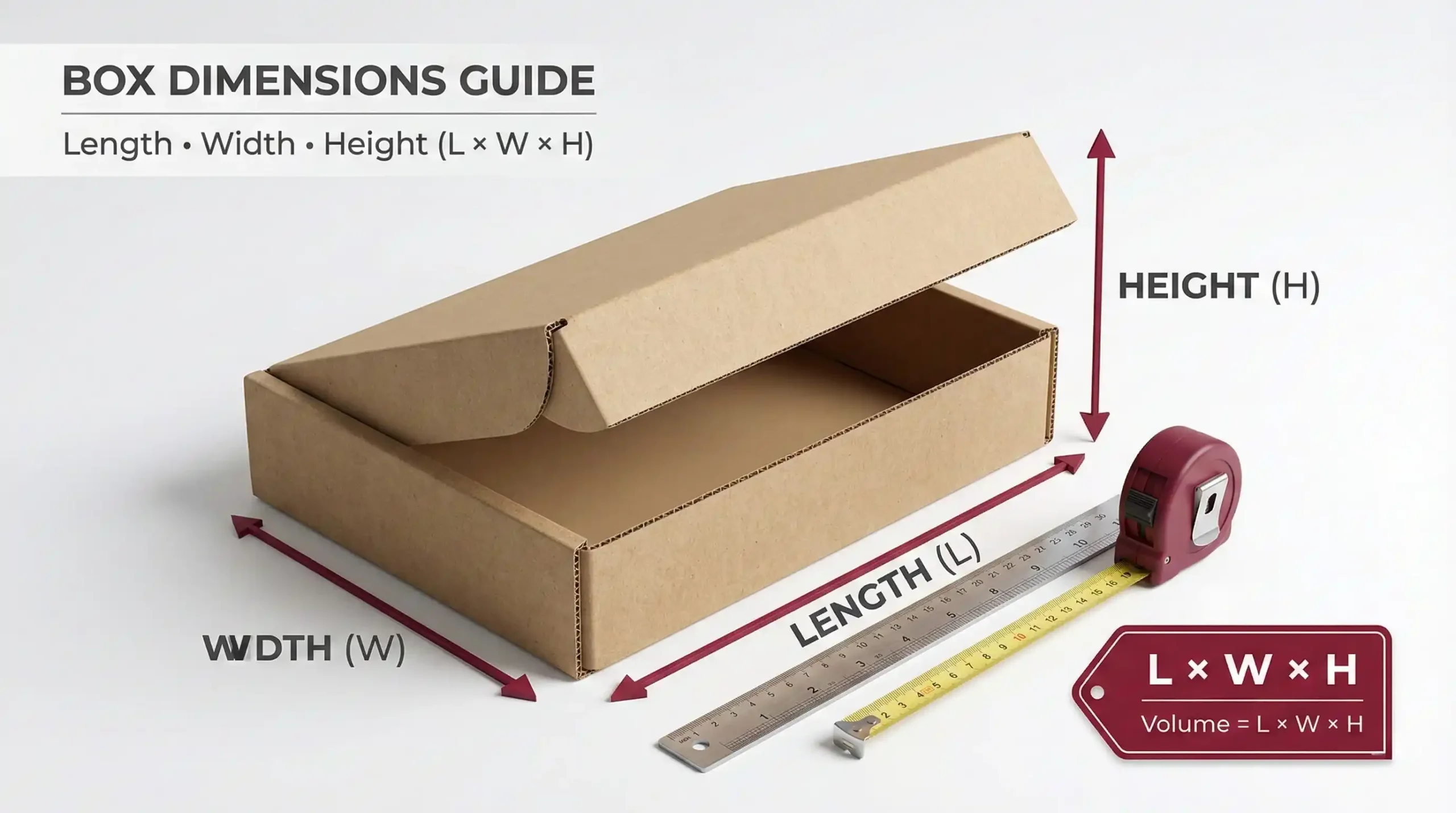
Imagine your premium product gets ruined because the packaging is oversized, or the box is so tight that a delicate item gets damaged, stuck, or scuffed during packing. Box sizing isn’t a small detail—it’s the foundation of safe shipping, clean presentation, and smooth unboxing.
Before ordering custom packaging, it’s important to understand the three core measurements: length, width, and height. These dimensions control how your product fits, how much space your shipment occupies, and how your packaging performs across storage, handling, and delivery.
Importance of Dimensions
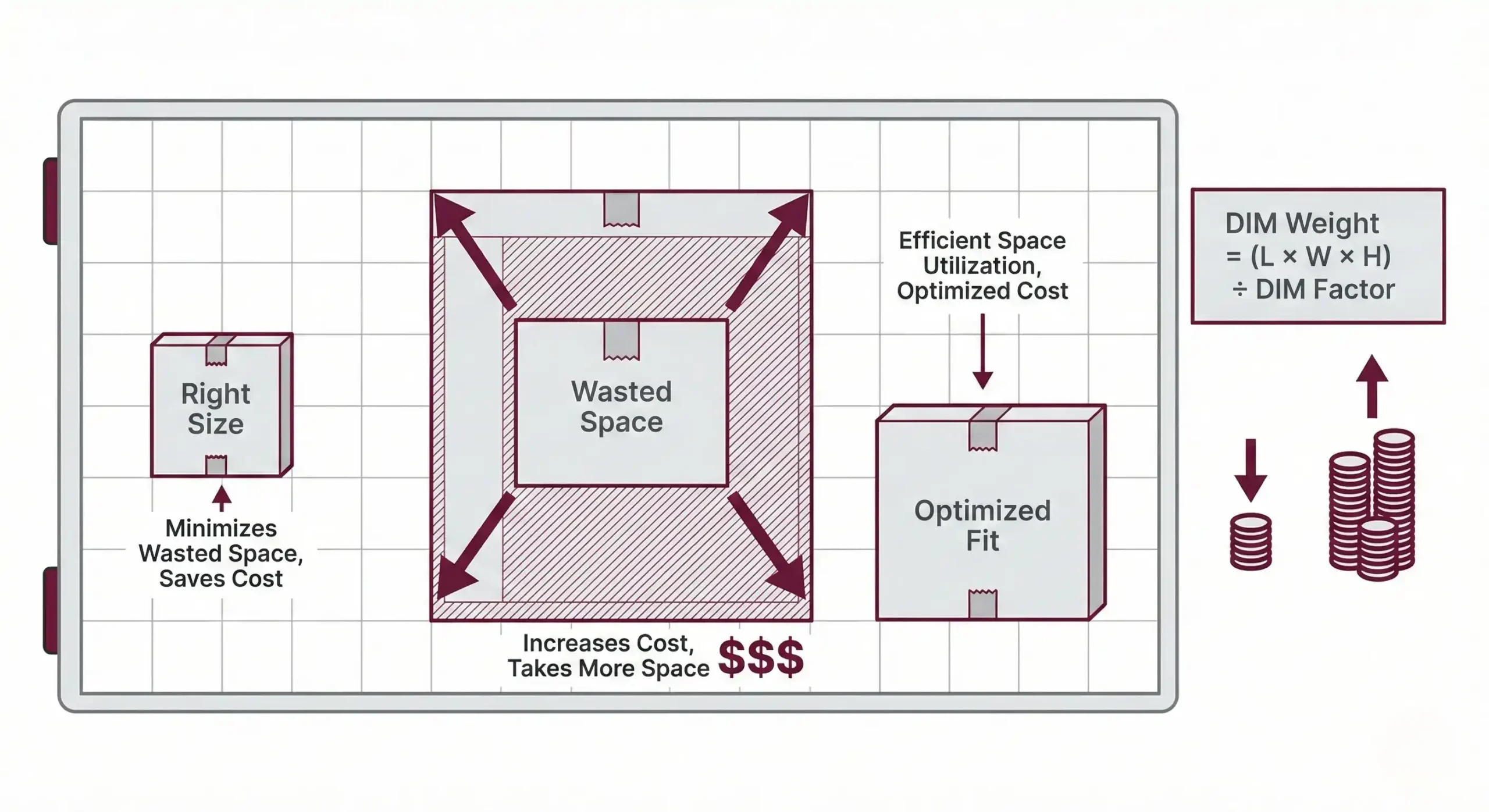
Packaging works like a protective shell. Even a small sizing mistake—too loose or too tight—can create problems in shipping, storage, and customer experience. Accurate length, width, and height help you control the fit, the cost, and the overall quality of packaging.
Product Protection
A correctly sized box reduces empty space, prevents items from sliding, and lowers the chance of impact damage during shipping and handling. When products stay stable inside the box, they arrive cleaner, safer, and in better condition at the customer’s doorstep.
Cost Efficiency
Dimensions directly affect shipping charges. Many carriers use dimensional weight (DIM weight), which prices shipments based on the volume a package takes up—not only the actual scale weight. Right-sizing your packaging can help reduce wasted space and avoid unnecessary shipping costs.
Storage Optimization
Precise internal and external measurements improve stacking, pallet planning, and warehouse organization. The better your box dimensions, the more efficiently you can use space in storage racks, delivery trucks, and fulfillment workflows.
What are Length, Width, and Height?
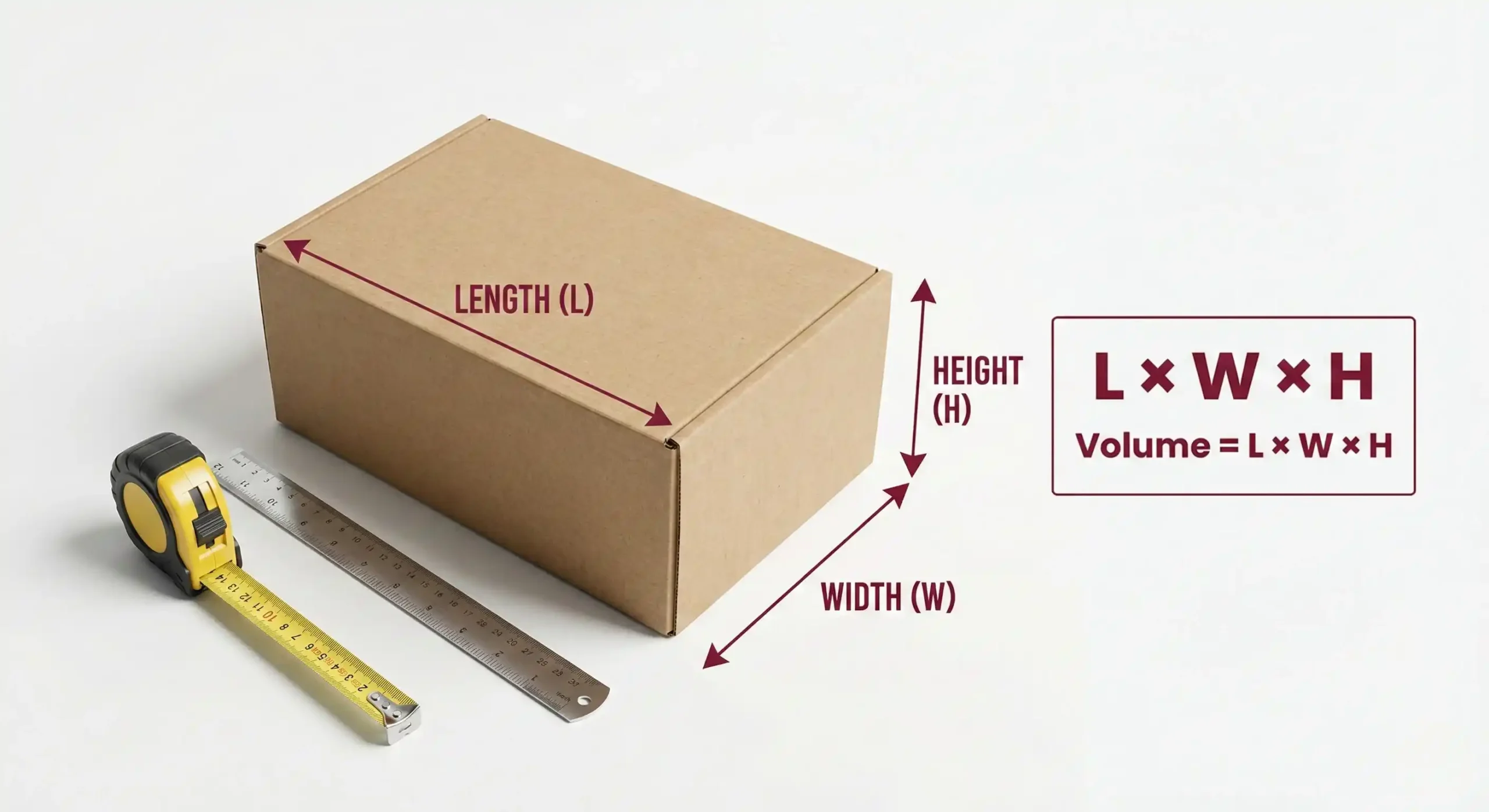
The formula Length × Width × Height is used to calculate the cubic size of a physical object. In packaging, it’s the standard way to describe box size and helps you determine volume, fit, and shipping calculations.
Before measuring a box, it helps to understand what each dimension means:
- Length: The longest side of the box base (or the longest side of the product).
- Width: The shorter side of the box base, perpendicular to the length.
- Height: The vertical measurement from the base of the box to the top.
How to Measure the Volume of a Box?
Measuring volume (cubic size) helps you estimate dimensional weight and plan shipping more accurately. To calculate volume, you need three measurements: length, width, and height.
Volume = Length × Width × Height
Example: If a shipping box has 16 inches length, 12 inches width, and 12 inches height, the calculation becomes 16 × 12 × 12, which equals 2,304 cubic inches.
What are 2D or 3D dimensions?
Two-Dimensional Boxes
A two-dimensional package is a flat format with only length and width and no real depth. Items like photographs, canvas prints, and documents often ship in 2D packaging.
Three-Dimensional Boxes
A three-dimensional (3D) box includes length, width, and depth/height. These boxes have volume and are commonly used for products such as shoes, cereals, tissues, cosmetics, and retail items.
Order of Length Width Height
The most common order for box measurements is Length × Width × Height. However, some brands or packaging styles may list dimensions differently depending on how the box is positioned—horizontal, vertical, or side-facing.
Height Width Length Order
Some vertical box styles are measured with height first, followed by width and length. This approach is often used when height is the dominant dimension in presentation packaging.
Height Length Width Order
In some horizontal packaging setups, measuring may start with height first, then length and width. The order can vary, but the volume calculation still uses the same multiplication logic.
Length Height Width Order
If a box is viewed from the side, you may measure length first, then height, then width. This can happen when the “front view” changes due to how the box is turned or displayed.
Length vs Width
In rectangular boxes, length and width sit at right angles to each other. Together, they define the base of the packaging and decide how long and wide your product can be placed inside the box.
Width vs Height
Width and height also meet at right angles. Width defines the side-to-side space on the base, while height defines the vertical clearance inside the box. Both dimensions influence how snugly a product fits and how well it is protected.
Height vs Length
Height measures how tall the box is, while length measures the longer side of the base. Depending on the viewing angle, length may appear to “hide” height, which is why it’s important to keep the box in its normal standing position during measurement.
Difference Between Length, Width, Height
Let’s use a cereal box as an example. From the front view, the tallest measurement (top to bottom) is the height. The left-to-right measurement across the front panel is the width.
Now rotate the box 90 degrees to view the side panel. The side panel depth can be considered the length (or depth, depending on how the box is labeled). For example, a cereal box may be 12 inches in height, 7.5 inches in length, and 2 inches in width.
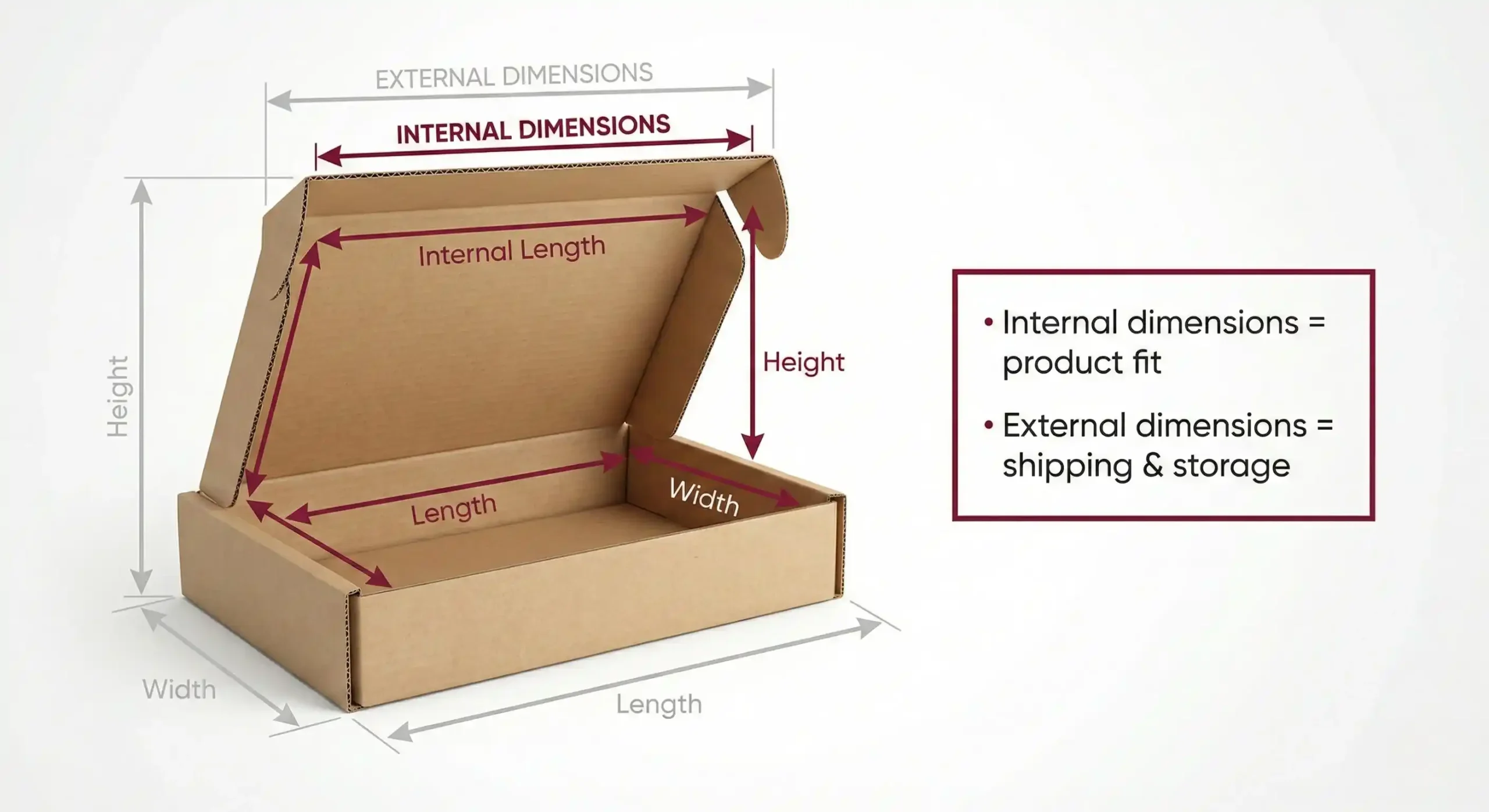
Measuring Internal Dimensions of a Box
One crucial detail in packaging measurement is to focus on internal dimensions. Many box size standards and manufacturing specs rely on internal measurements rather than external ones.
Internal dimensions matter because they define the usable space where your product must fit. They also help manufacturers produce a box that closes properly, protects better, and delivers a cleaner packing experience.
While external measurements can be easier to check, internal dimensions are the safer reference for custom packaging box sizing—especially when the goal is a snug fit.
Tips to Measure the Length, Width, and Height of a Box Correctly
Start with a simple checklist and the right measuring tools. Keep a measuring tape, a small ruler, and a notepad ready so you can record accurate numbers without guessing.
Measure the box in a consistent position. Identify height, then measure width and length based on the box base. For small mailers, a ruler can be more accurate; for larger boxes, a yardstick or long measuring tape works better.
Tools for Measuring Length, Width, and Height
Accurate measurement tools help ensure the product fits properly and the box performs well during packing, storage, and shipping. Here are reliable tools used for packaging measurement:
- A caliper to measure thickness.
- Rulers to measure length, width, and height precisely.
- Flexible measuring tapes to measure perimeter and larger sizes.
How to Note the Dimensions Length, Width, Height of a Box?
Writing dimensions correctly is important for clear communication with manufacturers and suppliers. The standard format is:
Length × Width × Height
- Length: The longest side of the box base from left to right.
- Width: The shorter side of the box base from the front view.
- Height: The measurement from top to bottom (vertical).
Example: A mailer box that measures 16 inches in length, 12 inches in width, and 8 inches in height should be written as:
16 × 12 × 8 (L × W × H)
This format works for square or rectangular boxes used for shipping, storage, and retail presentation.
Final Thoughts
Understanding length, width, and height helps you measure boxes correctly, calculate volume, and plan packaging that protects products without wasting space. It also supports better shipping decisions and cleaner fit for custom packaging.
If you need custom-sized packaging for any product category, The Packaging Masters can help you choose the right dimensions, structure, and fit—so your packaging performs perfectly from packing line to doorstep delivery.
FAQ’s
What comes first in dimensions, length, width, or height?
The standard order is Length × Width × Height (L × W × H). Length is typically the longer side of the base, width is the shorter side of the base, and height is the vertical measurement from base to top.
How do you measure the height of a box?
Place the box in its normal standing position and measure from the bottom base straight up to the top edge. Height is the vertical dimension and should be measured after identifying length and width on the box base.
What is L × W × H?
L × W × H represents Length × Width × Height. It’s commonly used to describe box size and to calculate volume for a three-dimensional object.
What is the correct order of L × W × H?
The correct standard order is Length × Width × Height. When measuring a box, length is usually the longest side of the base, width is the shorter side of the base, and height is the vertical distance from the base to the top.


